Is it just your portfolio, or is the whole market flat?
From sept 2024 to sept 2026
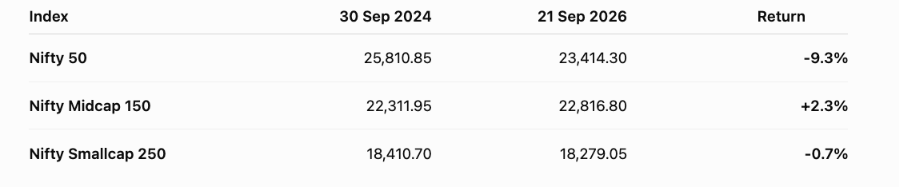
Despite almost two years passing, Indian indices have essentially produced very little absolute return, particularly compared with the strong 2020–2024 period.
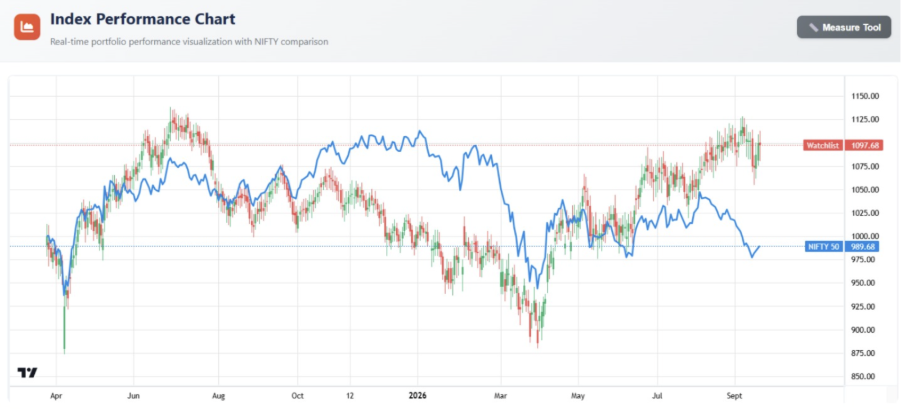
SIHO Gold portfolio performance: 10% returns since Apr 2025.
3 year back tested returns – 102%
5 years back tested returns – 178%
SIHO Silver portfolio performance: 8% returns since Apr 2025.
3 year back tested returns – 108%
5 years back tested returns – 247%
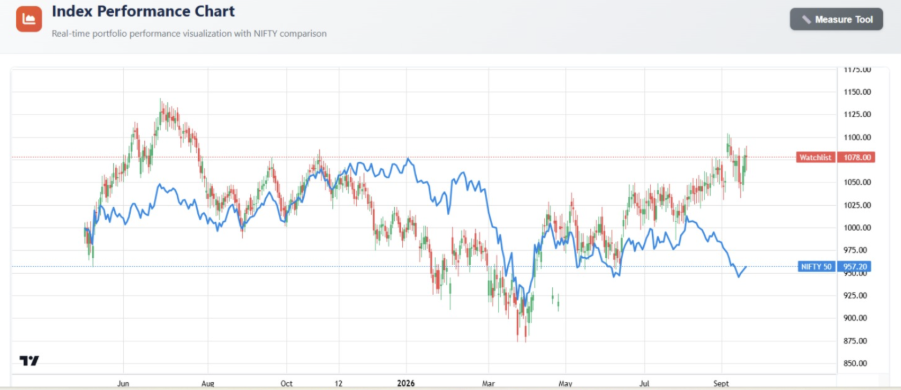
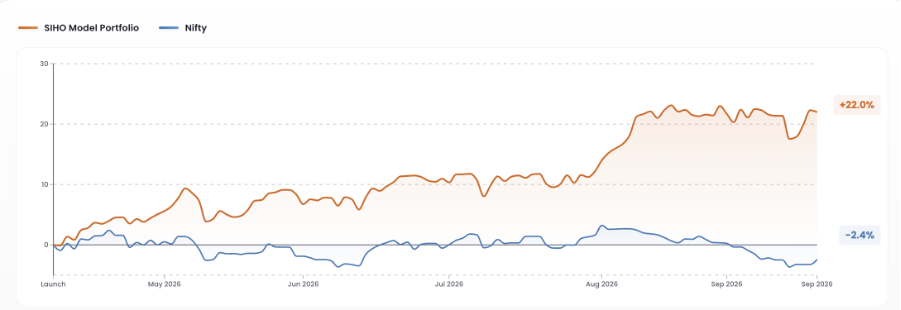
Our gold portfolio gave 10% and silver gave 8% return. SIHO portfolio gave more returns than wider indexed and to further improve our strategy we created a new portfolio which was based on new sectors which are in demand currently in place of sectors like brokerage and asset management, government capex-based capital goods sectors. The results are very encouraging, with the new portfolio gave 22% returns in 5 months from the creation of portfolio on 8th APR 2026. This portfolio was given free to all existing customers.
What happened after every earlier flat phase
| Flat / negative phase | Period of flat and negative return in past | Period post flat returns |
| 1994–2003 (~9 saal) | Sensex 1994 ~4,600 and in 2003 same level | 2003–2008: Sensex ~3,000 to ~20,000 (6x+) |
| Jan 2008 – 2013 (~6 saal) | Nifty Jan 2008 ~6,300 and 2013 end ~6,300 | 2014–2018: Nifty ~6,300 to ~11,000 (~75%) |
| Jan 2018 – Mar 2020 (Mid/Small) | Nifty flat, lekin Smallcap minus ~50-60% and Midcap ~30-40%. Lot of investors were in negative | 2020–2021: Smallcap 250 % and Midcap 150% |
| Oct 2021 – Mar 2023 (~18 mahine) | Nifty ~18,500 se ~17,000. 1.5 years zero return | Mar 2023 – Sept 2024: Nifty ~17,000 se 26,277 (~50%). Nifty Midcap 150 up 90% |
| Sept 2024 – abhi (~2 saal) | Nifty minus 11%, Mid/Small flat | waiting |
During a flat market phase, earnings continue to grow, but stock prices may not move much. As a result, valuations gradually become cheaper. Then, the returns that were delayed during the flat period can come sharply over the next one or two years.
An investor who exits during the flat phase may miss that recovery. We saw a similar pattern in both 2020 and 2023.
Should I have put the money in an FD instead?
FD returns VS NIFTY 50 returns during period of bad returns plus recovery period combined.
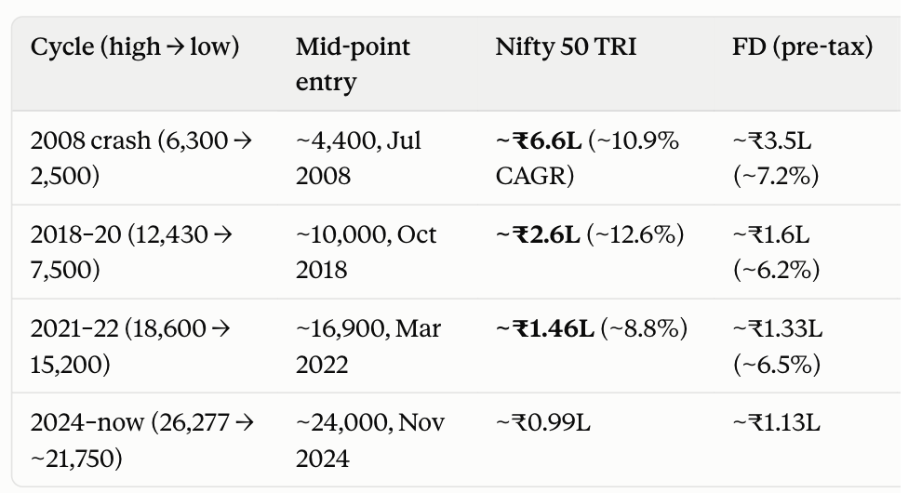
What this shows:
- For an average-timing investor, equity beat FDs in every completed cycle, and by a wide margin post-tax. The 2008 investor is about 2.7x ahead of a post-tax FD, and the 2018 investor is about 1.9x ahead.
- Even the 2021–22 cycle, which felt painful at the time, is now comfortably ahead of FDs after about 4.5 years.
- The only cycle where FDs are winning is the current one, which is still unfolding. Every earlier cycle looked exactly like this at the 1.5–2 year mark.
Third, 12 months is too short to judge. The mid-point data shows every earlier cycle looked flat at this stage and then beat FDs comfortably.
If returns are flat, why pay a fee to SIHO?
SEBI doesn’t allow RAs to charge return-linked fees or promise returns, so returns can’t be the basis of the fee. What you pay for is stock selection, ongoing monitoring, timely exit calls, and keeping you from panic-selling or chasing tips.
Performance
| Period | NIFTY performance | SIHO Gold performance | SIHO Silver performance |
| March 2025 – Sept 2026 | 0.4% | 10% | 7.8% |
In april 2026 , we created a new portfolio with sectors like Capital Goods / Energy, Automobile & Auto Components, Pharmaceuticals, Defence & Aerospace, Specialty Materials in which the runway of growth is looking much better and more ROI on capital invested and the returns are very encouraging with 22% returns in last 5 months.
Full portfolio performance, including all past recommendations, is available on our portfolio performance page.
So what should you do now?
You shouldn’t do is exit equity entirely out of frustration and move everything into FDs at the bottom of a flat phase. The historical data we looked at shows that’s usually the most expensive decision.
You should continue to build long terms portfolio because:
- The economy is growing fast. India grew 7.8% last quarter, one of the fastest in the world.
- Companies are earning more, but share prices haven’t gone up. That means stocks are now cheaper than usual.
- The market is below its normal valuation. In the past, buying at these levels has usually worked out well over 5 years.
- Manufacturing, services and investment are the fastest-growing parts of the economy.
- Indian investors are still putting money in, with record SIP inflows in August.
One additional thing we should do it not invest in wider market but invest in specific sectors like energy, automobiles automation, defence , AI & data centres and more specially in companies which are having long runway of growth for next 5-10 years with good profitability.
Equity remains a great vehicle for wealth creation i long term and we are here to support you in this journey.
Have questions about your own portfolio?
Book a 1:1 call with a SIHO research analyst — no obligation.
Disclaimer
SIHO Research Pvt. Ltd. | SEBI Registered Research Analyst | Registration No. INH000019813
Investments in securities market are subject to market risks. Read all the related documents carefully before investing.
Registration granted by SEBI, enlistment as RA with the Exchange and certification from NISM in no way guarantee performance of the intermediary or provide any assurance of returns to investors.